

My Realistic Skincare Routine at 38
Skincare in my late 30s looks a lot different than it did in my 20s. Back then, I could wash my face, use whatever moisturizer was nearby, and call it a day. Now, at 38, I want products that help my skin look hydrated, smooth, bright, and healthy—but I also need a routine I can realistically maintain.
I love trying skincare, so I have more than a few products in my cabinet. But having a lot of products does not mean I use all of them at once. I’ve learned that my skin usually looks better when I keep the basics consistent and rotate the stronger treatments instead of piling everything on every night.
This is the realistic morning and evening skincare routine I’m currently following, what each step does for me, and how I keep from overdoing it.
What I’m Trying to Improve at 38
My main skincare goals are:
Keeping my skin hydrated and glowing
Softening the appearance of fine lines
Supporting firmness and a smoother texture
Brightening dull or uneven-looking skin
Protecting the progress I’m making
I’m not chasing perfectly poreless skin because real skin has texture. I simply want mine to look healthy, fresh, and well cared for—with or without makeup.
My Morning Skincare Routine
My morning routine is focused on hydration, brightness, and protection. I keep it fairly simple because I want my skincare to layer well under makeup.
1. Gentle cleanse
I start with a gentle cleanser, or sometimes just rinse with water if my skin feels dry and I cleansed well the night before. I’m currently adding Tatcha The Rice Wash to this step. I don’t want my face to feel tight or stripped before I’ve even started the day.
2. Vitamin C
I use my Timeless Vitamin C serum because vitamin C helps support brighter, more even-looking skin and provides antioxidant protection. I apply it to clean, dry skin and give it a moment to absorb before moving on.
3. Peptide serum
Right now, I use Naturium Multi-Peptide Advanced Serum. When it is finished, I’m switching to Allies of Skin Copper Tripeptide & Ectoin Advanced Repair Serum. These are alternatives, so I use one or the other—not both together.
4. Eye products
I use Tatcha The Brightening Eye Cream around my eyes. I may also apply Agent Nateur Holi (Glow) Ageless Eye & Lip Serum underneath it when I want an extra step. I gently tap on a small amount instead of rubbing.
5. Moisturizer
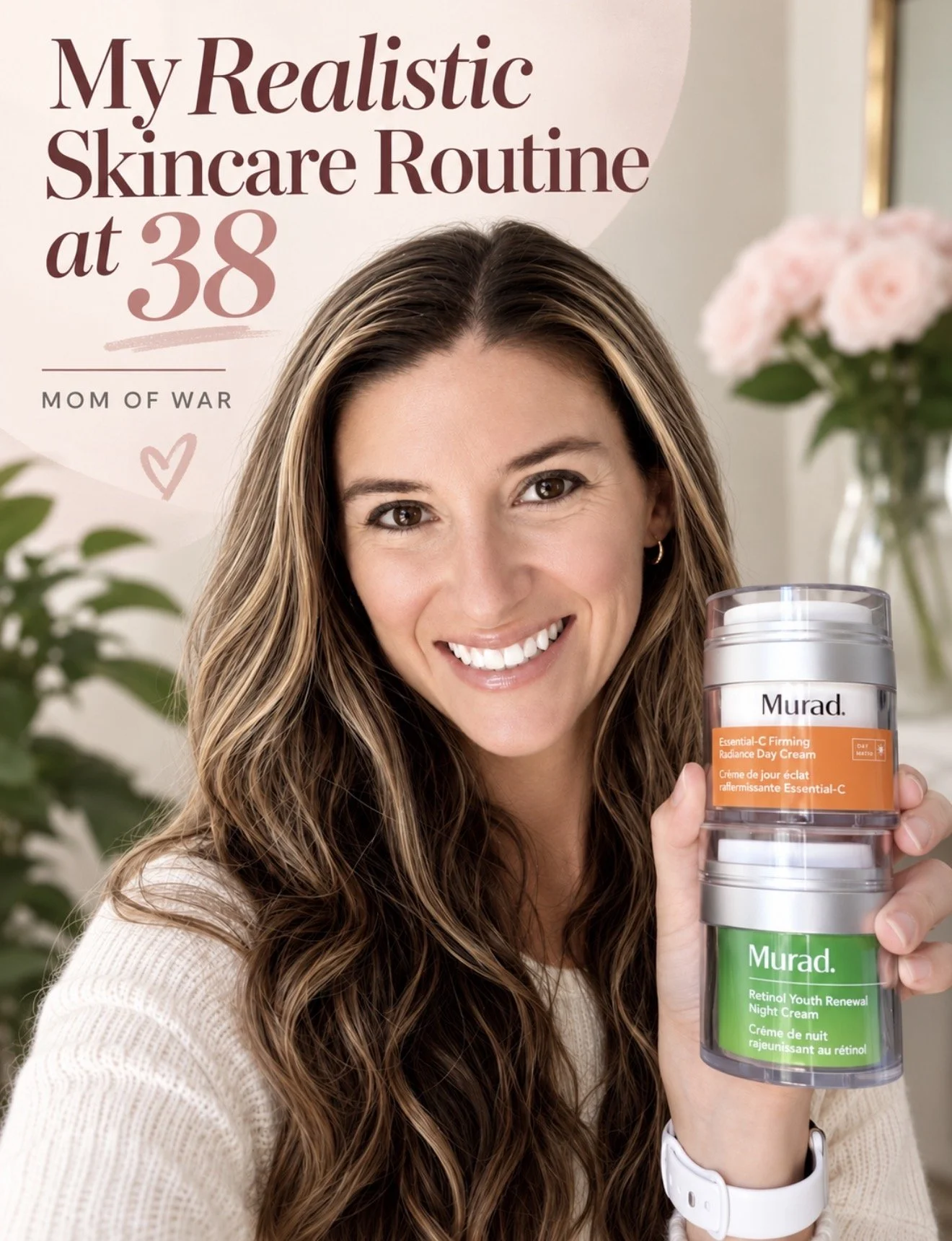
My regular daytime moisturizer is SkinCeuticals P-TIOX Wrinkle-Modulating Peptide Cream. I also rotate in Murad Essential-C Firming Radiance Day Cream, especially on Tuesday, Thursday, and Sunday. The goal is comfortable, hydrated skin without so many heavy layers that my makeup starts pilling.
6. Sunscreen
Sunscreen is the nonnegotiable final step. There isn’t much point in investing in brightening and anti-aging products if I’m not protecting my skin from additional sun damage. I use a broad-spectrum SPF every morning, including on days when I’m mostly inside or running errands. Here’s my current fave.
My Evening Skincare Routine
My nighttime routine changes depending on whether it is a retinol, peptide, or recovery night. This keeps my routine manageable and helps me avoid irritating my skin.
1. Remove makeup and cleanse
If I’ve worn makeup or sunscreen, I make sure it is completely removed before applying treatment products. I follow with a gentle cleanse so I’m starting with clean skin.
2. Choose one treatment focus
This is where my routine rotates. I don’t use every active product every night.
Retinol nights: Monday and Friday
For my face, I choose between The Ordinary Retinol 0.2% in Squalane, followed by SkinCeuticals P-TIOX Wrinkle-Modulating Peptide Cream, or a pea-sized amount of Murad Retinol Youth Renewal Night Cream on completely dry skin. The Murad cream replaces The Ordinary retinol for that night—I never use both face retinoids together.
Around my eyes, I use RANAVAT Brightening Retinol Eye Crème, and on my neck and chest, I use Murad Retinal ReSculpt Neck & Décolleté Serum. If my skin becomes irritated, I reduce the eye and neck retinoids and skip the optional Saturday retinol night first.
Retinol can help improve the look of fine lines and uneven texture over time, but more is not always better. I use a small amount rather than stacking additional active treatments.
If my skin feels sensitive or dry, I skip it. I would rather stay consistent at a comfortable pace than irritate my skin and have to stop completely.
Peptide and repair nights: Tuesday and Thursday
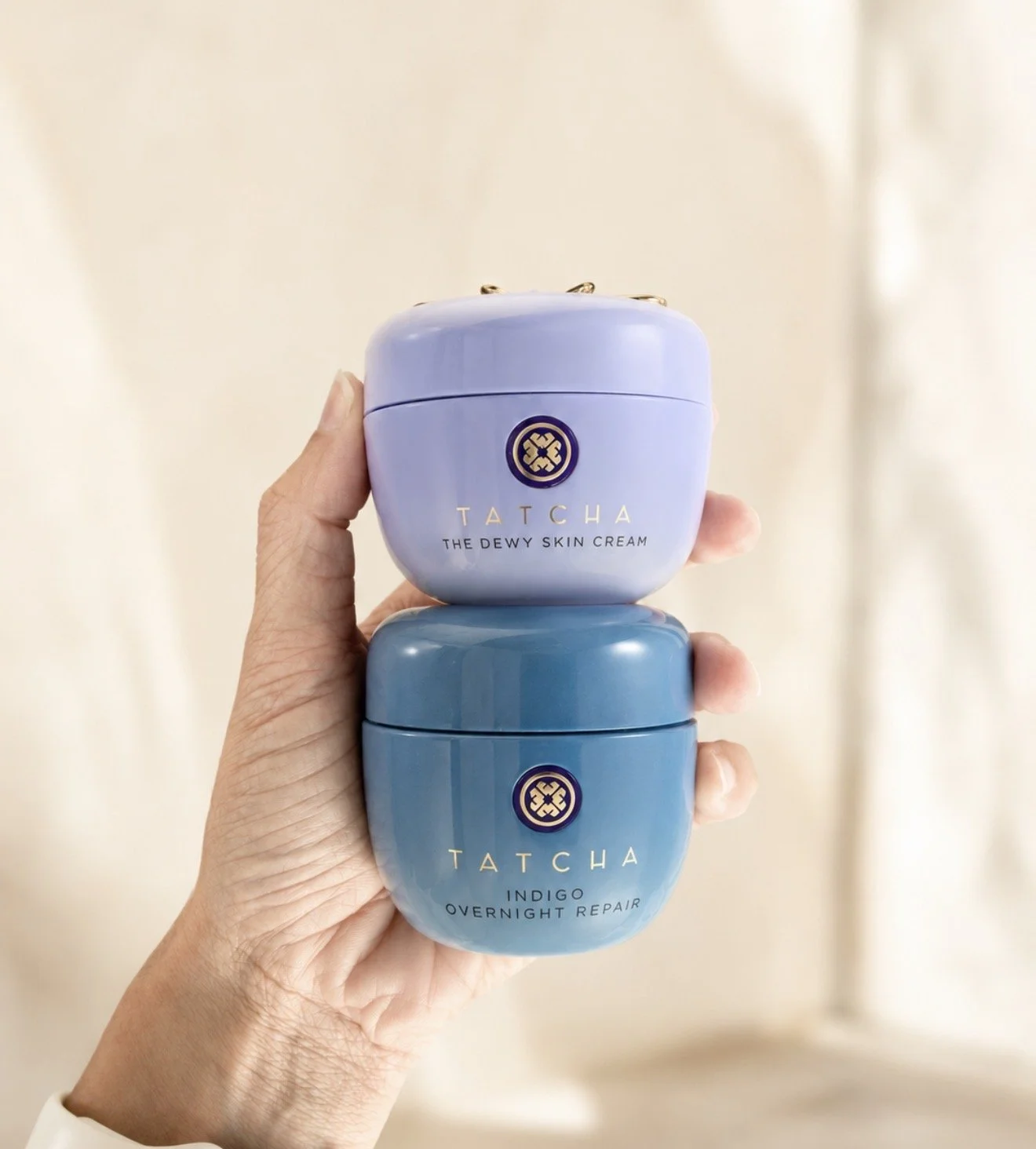
On repair nights, I use Naturium Multi-Peptide Advanced Serum now—or Allies of Skin Copper Tripeptide & Ectoin Advanced Repair Serum once I switch—followed by Tatcha Indigo Overnight Repair. I never layer the Naturium and Allies of Skin serums together.
Exfoliation night: Wednesday
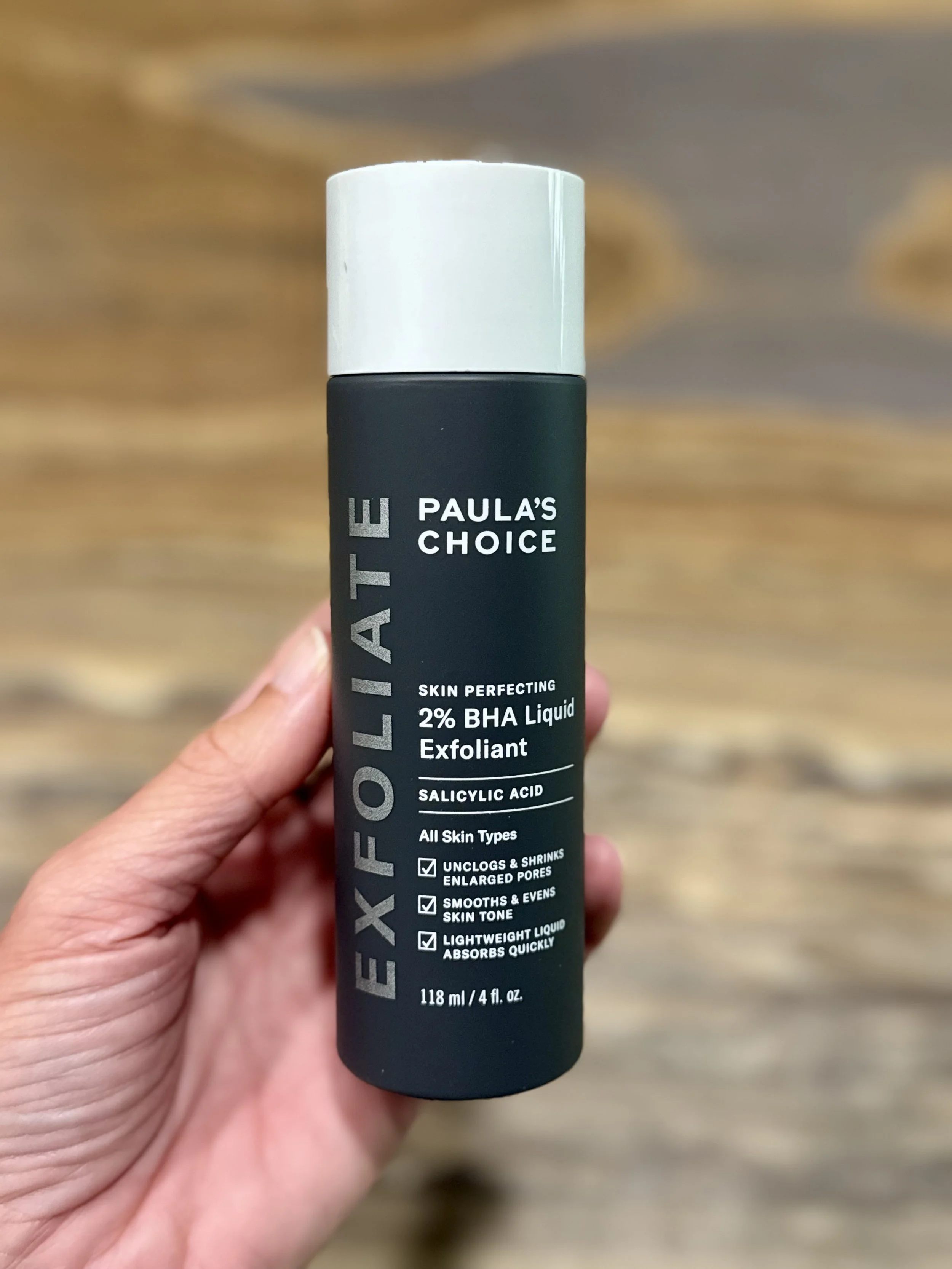
Once a week, I use Paula’s Choice Skin Perfecting 2% BHA Liquid Exfoliant. This replaces my face retinol for the night; I don’t stack the two.
Flex night: Saturday
If my skin feels completely calm, Saturday can be an optional third retinol night. If it feels dry or sensitive, I make it a repair night with my peptide serum and Tatcha Indigo Overnight Repair instead. Saturday retinol is the first step I drop if irritation starts building.
Sunday wrapping-mask night
Sunday is a peptide and repair night finished with the Medicube PDRN Pink Caffeine Night Wrapping Mask. I keep the rest of the routine gentle instead of forcing in another strong active.
My Simple Weekly Rotation
My exact schedule can change when my skin needs more hydration, but a typical week looks something like this:
Monday: The Ordinary Retinol 0.2% in Squalane + SkinCeuticals P-TIOX, or Murad Retinol Youth Renewal Night Cream—never both; RANAVAT eye retinol; Murad neck and chest retinal
Tuesday: Naturium Multi-Peptide Advanced Serum—or Allies of Skin Copper Tripeptide & Ectoin Advanced Repair Serum—+ Tatcha Indigo Overnight Repair
Wednesday: Paula’s Choice Skin Perfecting 2% BHA Liquid Exfoliant; no face retinol
Thursday: Peptide serum + Tatcha Indigo Overnight Repair
Friday: Retinol routine
Saturday: Optional third retinol night only if my skin is calm; otherwise peptide and repair
Sunday: Peptide and repair routine + Medicube PDRN Pink Caffeine Night Wrapping Mask
The biggest lesson I’ve learned is that a schedule should serve your skin—not the other way around. If my face feels irritated, tight, or unusually dry, I pause the active products and focus on moisture.
The Products I Reach for Most
These are the exact products in my current routine and the updated products I’m transitioning to:
Allies of Skin Copper Tripeptide & Ectoin Advanced Repair Serum, replacing Naturium when it arrives—not layered with it
Murad Retinol Youth Renewal Night Cream, used instead of The Ordinary on a face-retinol night
I’ll keep this post updated as I finish products, try new ones, and decide what actually deserves a permanent place in my routine.
Shop my current skincare routine here.
What Has Made the Biggest Difference
The most important part of my routine has not been one miracle product. It has been consistency.
Using sunscreen, keeping my skin hydrated, introducing retinol slowly, and resisting the urge to use every exciting product at the same time have made my routine much easier to maintain. I also pay attention to how my skin feels instead of forcing myself to follow a complicated schedule.
Final Thoughts
At 38, I want my skincare routine to help me look like a rested, glowing version of myself—not like a completely different person. I enjoy trying new products, but I’m learning to be more intentional about what I use and when I use it.
If you’re building a routine in your late 30s, you don’t need a cabinet full of products to begin. Start with a gentle cleanser, moisturizer, sunscreen, and one treatment that addresses your biggest concern. Add products slowly, stay consistent, and give them time to work.
Interested to find out more changes I’ve implemented in my late 30’s? Here’s another good read: Things I’ve Stopped Doing As A 37-Year-Old Mom (And I’m Happier For It)
This post shares my personal experience and is not medical advice. Retinoids are generally avoided during pregnancy and breastfeeding; ask your healthcare professional what is appropriate for you. Patch-test new products and follow each product’s directions.
